


Deemed To Have Been Lawfully Done

On the morning of 12 December 1948, twenty three men walked out of a hut on a rubber estate in Selangor and were shot dead within minutes. A twenty fourth had been killed the evening before. The men were Chinese rubber tappers on the Sungei Remok Estate, near Batang Kali. None was armed. None was in uniform. The patrol that killed them was British.
Seventy seven years later, no court has determined whether those killings were lawful. Three have said in terms that they may well have been unlawful, and then declined to decide. The case has been before the Attorney General of the Federation of Malaya, Scotland Yard, the Royal Malaysia Police, three British courts and the European Court of Human Rights. Not one of them answered the question.

The patrol had no officer
Fourteen soldiers of 7 Platoon, G Company, 2nd Battalion Scots Guards went out: two lance sergeants, a lance corporal and eleven guardsmen, with a Malay special constable and two police officers, Detective Sergeant Gopal and Detective Constable Woh.
The patrol was commanded by Lance Sergeant Charles Douglas, aged twenty two. His second was Lance Sergeant Thomas Hughes, a veteran of the last war. A captain commanding a separate patrol that day was told no officer was available for this one.
Twenty four people died on a patrol led by a twenty-two-year-old, in a counter insurgency campaign six months old.
The night before
The Divisional Court set out ten factual propositions in 2012. The Court of Appeal later recorded "no proper basis for disputing the accuracy of these 10 factual propositions".
The settlement held families, no uniforms, no weapons, people of various ages. The patrol had been chasing two armed insurgents and lost them. A young man named Loh Kit Lin was shot dead on the evening of 11 December. The inhabitants were separated, men from women and children, and held overnight. Interrogation included simulated executions that left people traumatised. The women and children were then loaded onto a lorry and driven away.
Then: "The hut with 23 men was unlocked. Within minutes all of the 23 men were dead as a result of being shot by the patrol."
The huts were burned. The patrol returned to base. One man survived by lying still among the dead. In the court papers he is Cheung Hung.
Shot while escaping
The escape account was public almost at once, in the Straits Times by 13 December 1948 and endorsed by General Boucher four days later. Official statements followed in January 1949. The dead were bandits who had split into groups, run for the jungle after warnings, and been shot in flight.

That account rested on a general order that any detained person who tried to escape was to be chased and recaptured. The court recorded that no written order was ever found.
Thirty nine days later, the law changed
On 20 January 1949 the Emergency Regulations were amended. A new Regulation 27A permitted the use of lethal weapons to stop and search and to prevent escape. Its sixth paragraph read:
"Any act or thing done before the coming into force of this Regulation which would have been lawfully done if this Regulation had been in force, shall be deemed to have been lawfully done under this Regulation."
The regulation came into force thirty nine days after the killings, and it reached backwards.
The families' lawyers have argued for decades that it was written to cover Batang Kali. No document establishes that, though the Court of Appeal observed that the provision "appeared to protect the guardsmen" if the twenty four had been killed during an attempted escape. What is documented is the sequence. In December the Regulations contained no such power. By late January they did, backdated.
The inquiry that was not an inquiry
In December 1948 and January 1949 the Attorney General of the Federation, Sir Stafford Foster-Sutton, looked into what had happened. No sworn evidence was taken. He worked from statements the police had taken from the patrol. No villager was questioned, and no survivor, "for a very good reason, because they were most unlikely to talk and, if they did talk, to tell the truth".
He reached no formal finding on the record. Twenty one years later, asked about it on The World at One, he said he was "absolutely satisfied a bona fide mistake had been made".
The war around it
The Malayan Emergency ran from June 1948 to July 1960. It was called an emergency rather than a war partly because London insurers would not have covered rubber and tin losses in a war.
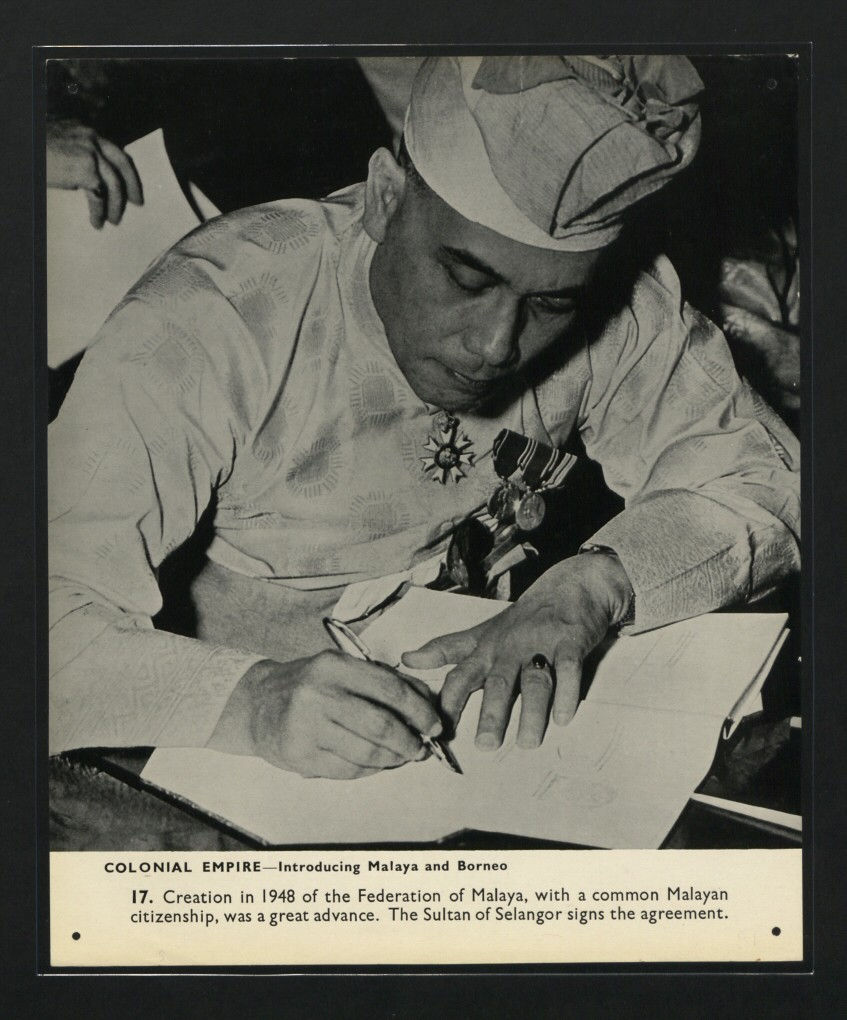
Its central instrument was population control. Under the Briggs Plan from mid 1950, roughly 573,000 people were resettled into around 480 New Villages: barbed wire, guarded gates, watchtowers, a police post at the gate. Another 650,000 were regrouped onto estates, mines and town edges. Dr Francis Loh Kok Wah puts the combined total near 1.2 million.
1970: eleven days
In late 1969 former Guardsmen began to talk. William Cootes swore a statement and The People ran it. Alan Tuppen, Robert Brownrigg, Victor Remedios and George Kydd followed.
The 2012 judgment summarises their statements: the men had been shot on Sergeant Hughes's orders as suspected bandits or sympathisers, and the patrol had been told by the Army to say the dead had been trying to escape. Two other Guardsmen, George Porter and Roy Gorton, told the same investigators the men had been shot attempting to escape.
The Director of Public Prosecutions put Scotland Yard onto it. Investigators planned to travel to Malaysia that summer.
Then the calendar. On 18 June 1970 the government changed at a general election. On 26 June the new Attorney General, Sir Peter Rawlinson QC, indicated at a meeting with the DPP that it was unlikely sufficient evidence would be obtained to support a prosecution, and therefore that the investigation should go no further. On 29 June the DPP wrote it up:
"The evidence shows that there is a substantial conflict among the soldiers who were present at the village of Batang Kali ... Taking into consideration these facts together with the fact that the incidents took place 21 years ago, I am satisfied that the institution of criminal proceedings would not be justified on the evidence so far obtained."
Eleven days from the polls to the end of the investigation. Nobody had gone to Malaysia. The conflict between the soldiers was real. What the letter adds to it is twenty one years.
The BBC broadcast "In Cold Blood" in September 1992. Survivors filed a police report in Kuala Lumpur the following July, and the Royal Malaysia Police closed that file on 30 December 1997, again for insufficient evidence. The Action Committee Condemning the Batang Kali Massacre formed in 2008 around the lawyer Quek Ngee Meng, with John Halford of Bindmans acting in London. British ministers refused an inquiry in November 2010 and again in November 2011. Those refusals went to court.
What the courts actually decided
The Divisional Court dismissed the claim in September 2012, the Court of Appeal in March 2014, the Supreme Court on 25 November 2015.
You will read online that the Supreme Court found the killings unlawful. It did not. Lord Neuberger, analysing whether a duty to investigate had ever been triggered, wrote that the evidence which surfaced in late 1969 and early 1970 "plainly suggested that the Killings were unlawful" and was "weighty and compelling". The next clause, which almost never survives the retelling, is "although by no means conclusive in the light of the other evidence".
A second half-quotation runs the other way. Campaign material and several reference pages say the courts found evidence supporting a deliberate execution of the twenty four. That is true as far as it goes. The Divisional Court, quoted by the Supreme Court at paragraph 130, said it is "no longer ... permissible to conclude ... that the 24 men were shot when trying to escape", and in the same breath: "[n]or can the conclusion now be reached that the 24 men were deliberately executed. There is evidence that supports both accounts." The court granted both halves. The circulating version keeps one.
What the Supreme Court did say in its own voice: the Divisional Court, the Court of Appeal "and now this court have all said in terms that the official UK Government case as to the circumstances of the Killings may well not be correct and that the Killings may well have been unlawful."
On the law it split three ways. It unanimously rejected the Government's argument that the United Kingdom was not answerable for what the Scots Guards did in Malaya. It unanimously held that the duty to investigate under Article 2 of the European Convention could not reach back this far, and unanimously rejected a duty under customary international law. On whether refusing an inquiry was irrational, it dismissed the appeal four to one. Lady Hale dissented.
That refusal was upheld for reasons mostly not about time. The Inquiries Act 2005 bars an inquiry from determining liability. Findings about 1948 training and command structures were thought unlikely to be of practical value now. Evidence would have to be gathered in Malaysia, possibly including exhumations. And Lord Neuberger noted where it would lead: to demands that all suspicious deaths, however old, be looked into.
Eighteen years
The Article 2 point is where the clock becomes the whole case. Strasbourg allows a duty to investigate a historic death only where there is a genuine connection between the death and the entry into force of the obligation, and that connection is capped at about ten years.
The United Kingdom accepted the right of individual petition in 1966. The killings were in 1948. Eighteen years. Ten is the limit.

The families went anyway. In Chong and Others v the United Kingdom, application 29753/16, the European Court of Human Rights declared the case inadmissible in a decision announced on 4 October 2018 on exactly that arithmetic. The Convention itself was adopted in 1950, and the Court noted that its Convention values fallback could not apply to events predating it. The men died in 1948.
The case against this article
Neal Ascherson, reviewing Christopher Hale's Massacre in Malaya in the London Review of Books, put it this way: "In the narrow sense, Batang Kali was not representative at all. As a conscript soldier in that war, which certainly led to some atrocities and many cruelties, I can say that the massacre remains unique and mysterious." That denies Batang Kali the one thing the My Lai comparison in Hale's subtitle needs, which is a pattern. Christi Siver, searching the unit and intelligence reports for other mass killings of civilians by British forces in Malaya, could not find them.
Richard Stubbs, surveying the historiography in 2024, insists Malayans were not simply victims or bystanders. Around 300 Malayan Chinese Association officials and members were murdered during the Emergency. Malays and Tamils served in the police, rural Chinese joined home guards, and a story told only as British violence against passive villagers erases the Malayan Communist Party's own terror.
And the state's position was never that nothing happened. It was that no investigation opened in 1970, or 2010, could now establish to a criminal standard what happened in 1948. Four of five Justices held a minister could reasonably conclude the same.
Deep regret
On 31 March 2025 Catherine West MP, the Minister for the Indo-Pacific, wrote to the Action Committee. The United Kingdom "deeply regrets the tragic deaths and the pain suffered by many families", the letter said, and, most significantly, that "unhelpful, incorrect narratives portraying those killed as supporters of the insurgency have compounded the harm".

That clause retires, after seventy-six years, the characterisation of the dead as bandits. Several outlets reported it as an apology. The Government did not use that word, did not concede unlawfulness, and did not order an inquiry. No new inquiry, the letter says, would have a realistic prospect of definitive conclusions about 1948.
Which is where it has always ended. A regulation written afterwards and pointed backwards. A prosecution abandoned three days after a new Attorney General said it should go no further, on grounds that included how long ago it was. A Convention that arrived two years too late and a right of petition eighteen years too late. A refusal to inquire, because too little could now be learned.
Twenty four men were shot dead on a rubber estate in Selangor. Nobody was ever charged. Three courts have said the killings may well have been unlawful, and none was ever asked to decide it. The question has been put three times to bodies that could only decline to prosecute, and never once to a body that could rule.
Sources consulted
Keyu v SSFCA [2015] UKSC 69, judgment and press summary, 25 November 2015
Keyu v SSFCA [2012] EWHC 2445 (Admin), 4 September 2012
Keyu v SSFCA [2014] EWCA Civ 312, 19 March 2014
ECtHR, Chong and Others v the United Kingdom, no. 29753/16, 4 October 2018
Catherine West MP to the Action Committee, 31 March 2025, full text via Aliran
Francis Loh Kok Wah, "Emergency exits", Aliran
Richard Stubbs, "Debating the Malayan Emergency", Journal of Southeast Asian Studies, 2024
Christi Siver, "The Other Forgotten War", APSA conference paper, 2009
Neal Ascherson, "A Plan and a Man", London Review of Books, 2014
National Army Museum and Imperial War Museums, Malayan Emergency guides
Next in Cold Files: Biafra, 1967 to 1970. A blockade, a starving republic, and the first famine broadcast live into European living rooms.
Cold Files runs twice a week. For the daily situation reports and everything else, join us on Telegram at t.me/TheLeaflet.


Comments