.png)


The Four Day Window: Witkoff and Kushner Fly In, and Both Sides Agree to Hold Fire Over Kyiv
- chris Naganuma
- 2 days ago
- 5 min read


Hours before Steve Witkoff and Jared Kushner landed at Vnukovo on September 5, Russia flew a drone into the third floor of SBU headquarters in central Kyiv, aimed, in Zelensky's words, specifically at the office of the service's chief. Then came something these morning briefs have not been able to report in months: both sides publicly agreed to stop shooting at the same city.
Ukraine's Defense Forces have been ordered to hold fire from September 5 through September 8. The Kremlin says Putin ordered a three day halt on strikes on Kyiv. Witkoff and Kushner are carrying what Trump calls a proposal to end the war, and for roughly four days, the air war has a window.
A drone in the director's office
Start with Thursday, because it frames everything that followed. On the afternoon of September 4, a Russian drone struck the SBU's central building on Volodymyrska Street, across from St. Sophia Cathedral, hitting the third floor where the office of SBU chief Oleksandr Poklad sits. Kyiv Post reports seven injured in the district, six hospitalized, and the Zavertaylo restaurant near Zoloti Vorota wrecked while staff and guests sheltered in the basement. ArmyInform reports the drone was launched from occupied Donetsk Oblast, and that it did not fly alone.
Zelensky said the drone "was directed specifically at the office of the SBU chief" and told Poklad to prepare a tangible response, mirroring Russia's strike if possible. Foreign Minister Andrii Sybiha called it a major escalation. The channel reads it the same way Kyiv did: a message about who controls escalation, delivered 48 hours before American negotiators were due in the same city.
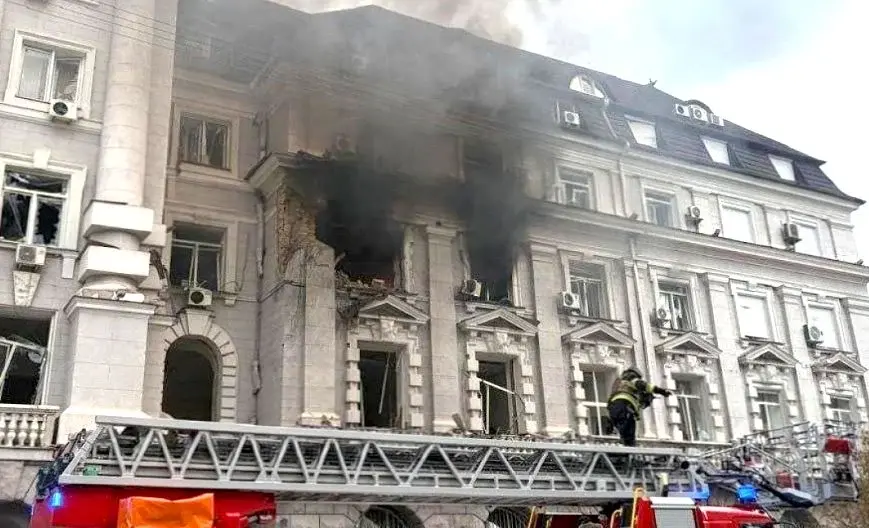
Photo: ArmyInform, CC BY 4.0
Ukraine's four day stand-down
That same evening, Ukrainska Pravda, citing military sources, reported that units of Ukraine's Defense Forces received an order to hold fire from 00:00 on September 5 through 23:59 on September 8, with troops cleared to shoot only in response to Russian action. Militarnyi confirmed the order through its own sources. Per Kyiv Post, Kyiv proposed pausing both long-range strikes and frontline hostilities for the window, and Zelensky said it publicly: "There will be no air strikes from our side, and Russia must do the same." He was explicit that the restraint protects the negotiators, not Russia.
The scope matters. Ukraine agreed to suspend the deep-strike campaign, the refinery and logistics war this channel has tracked all summer, for four full days. That is not a small chip. August set records: 21 refinery strikes, Russian refining at its lowest in over 20 years, and strikes reaching from Sochi's port to a bomber division commander's motorcade. All of it goes quiet until Tuesday, on Kyiv's own initiative.
167 drones later, Moscow answered
Russia's first answer was not reciprocal. Overnight into September 5, hours after Ukraine's hold began, Russia launched ballistic missiles and 167 drones. Ukraine's Air Force says 128 drones were shot down or suppressed; strikes landed at 23 locations across nine oblasts. Zelensky says Kyiv's Zhulyany airport and Boryspil were deliberately targeted, a first in a long while for the capital's airports, with a nine story residential building in Boryspil set ablaze. The past day killed at least 7 and injured 51 per regional authorities: five dead in Dnipropetrovsk Oblast, two in Kherson.

Photo: DSNS via ArmyInform, CC BY 4.0
Then, with the envoys already on the ground in Moscow, Peskov announced that Putin ordered a three day halt on strikes on Kyiv, linked, in his words, to preparations for the envoys' visit to the Ukrainian capital. Note the asymmetry. Ukraine's order covers its whole deep-strike arsenal and the front line for four days. The Kremlin's covers one city for three, and it was announced only after a full night's barrage of everywhere else. Reports differ on whether the halt runs from midnight on the 5th or the night into the 6th; either way, Sunday is the test.
What Witkoff and Kushner are carrying
The two envoys were met at Vnukovo by Kirill Dmitriev. It is their first Moscow trip since January, when they saw Putin at the Kremlin, and their first ever to Kyiv, expected Sunday, September 6. Axios reports Trump saying they carry a proposal to end the war; Peskov, asked what is in it, pointed reporters to Trump's own line that no new ideas are being discussed. Bloomberg reports Kremlin expectations are "extremely low." The last structured process, the Geneva track, stalled in February.
The channel's skepticism is earned, not reflexive. Militarnyi counts the truces Russia agreed to and then violated across 2025 and 2026: Easter, May, the energy ceasefire, the maritime ceasefire. The closest precedent is barely ten days old: the late August, US-requested pause on strikes against Moscow and St. Petersburg during the CIA director's visit, which Russia answered with a 426 drone night everywhere else. The pattern is stable. Moscow treats a pause as a routing instruction, not a ceasefire.
Why it matters
For four days, the two capitals have traded their most valuable card, quiet, for a seat at a table neither controls. Ukraine gave up momentum in the one campaign that is measurably working, the fuel and logistics war, to prove it is not the obstacle to Trump's process. Russia conceded only Kyiv's airspace, and only after demonstrating, on the SBU building, that it can put a drone through a specific third floor window in the capital whenever it chooses.
And the stakes concentrate on Sunday: two American envoys, one of them the president's son-in-law, physically in a city Russia was hitting with ballistic missiles 24 hours earlier. If the halt holds, it proves Moscow can switch the air war off when it wants to, which is its own kind of admission about every hospital and apartment block hit this year. If it does not hold, it ends the process before it starts.
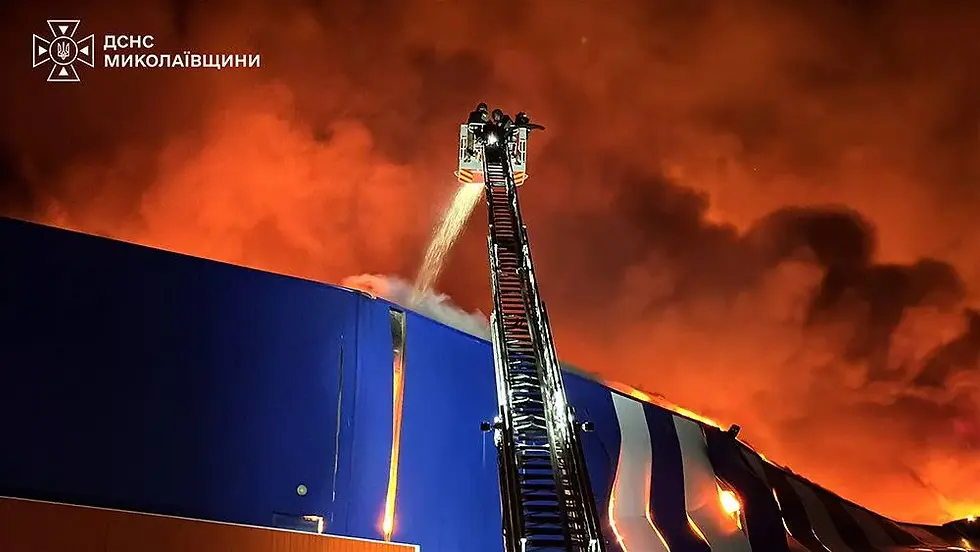
Photo: ArmyInform, CC BY 4.0
What to watch
Watch whether a single Shahed crosses into Kyiv Oblast before Wednesday, and whether Russia keeps hammering everywhere else, which the September 5 tally suggests it will. Watch what surfaces from the Moscow meetings before the envoys land in Kyiv, and whether Zelensky's promised adjustment of operations "regarding Russian airspace" next week means the deep-strike campaign comes back harder on Tuesday. And watch the SBU: Zelensky says the geography of the response has already been chosen.
The channel will be watching all four days of the window. For the live feed as it happens, follow us at t.me/TheLeaflet, and come back tomorrow for the next Daily Sitrep.
Read next: The Quiet Corridor: A CIA C-17 in Moscow, a Two-City Pause, and 426 Drones Everywhere Else | Closing the Sky: Zelensky Puts Russian Aviation on Notice, and the Numbers Say He Can
Want the recap in your inbox? The channel sends one Sitrep Digest email on the 1st of each month, the best of the morning briefs in a five minute read. Drop your email in the subscribe box at the bottom of this page.
Sources
Kyiv Independent, Kyiv Post, Militarnyi, Ukrainska Pravda, ArmyInform, NPR, plus Axios and Bloomberg reporting as cited. Photos credited inline.


Comments