.png)


Paper Patriots: Ukraine's Patriot Production License Is Back on the Table
- chris Naganuma
- 1 day ago
- 4 min read


The seventh night, and a radio interview
Overnight into September 3, Russia put 163 aerial targets into Ukrainian skies: Shahed-type drones, roughly half of them jet-powered, S8000 Banderol cruise munitions, Gerbera decoys. Ukraine's air force reported 135 drones intercepted. Strikes got through at 15 locations across 13 oblasts, killing at least five people and injuring 67, per the Kyiv Independent. Hours earlier in Washington, the Patriot production license for Ukraine had suddenly become a live negotiation again.
A drone slammed into the upper floors of an Odesa high-rise, wounding 17 people including three children. Dnipropetrovsk lost four dead. And for the first time in weeks, the wave reached deep west: Khmelnytskyi and Vinnytsia oblasts both took hits.
It was the seventh consecutive night Kyiv itself came under attack. On September 2, as that siege week closed, US Secretary of State Marco Rubio went on the Brian Kilmeade Show and confirmed what Kyiv has been chasing since summer, saying the license is "being negotiated as we speak."
The channel has tracked Ukraine's interceptor deficit all summer. This is the story of the paperwork behind it: a license pledged in July, withdrawn three weeks later, and now back on the table while the math underneath keeps getting worse.

Photo: ArmyInform, CC BY 4.0
The Patriot production license: pledged in Ankara, pulled at Camp David
The timeline matters, because this is the third position Washington has taken in eight weeks.
July 8, NATO summit in Ankara: President Trump, sitting with Zelensky, announced it outright. "We're going to give a license to you to make Patriots. That's pretty cool. This way, you can't complain that we're not giving 'em enough." Defense News reported that even the variant, PAC-2 or PAC-3, was left undefined, and that Lockheed Martin had not been formally notified.
July 28, White House: Zelensky left a meeting saying Trump had "accepted that he will give us licenses" for Patriots. July 31, Camp David: reversal. "We have not agreed to that," Trump told his Cabinet, per the Kyiv Independent. "We're talking about it, but it's a hard thing to give away that kind of technology."
September 2: Rubio puts it back in play, negotiated as we speak, with a caveat the channel would underline twice: ramping up production takes "multiple years," and a license "won't solve the short-term challenge."
For scale: only Germany and Japan currently hold Patriot production licenses outside the United States. Ukraine would be the third country in history, and the first to build them while under fire from the missiles they intercept.

Photo: ArmyInform, CC BY 4.0
The interceptor math has not improved
Zelensky put hard numbers on the deficit in his August CNN interview. Ukraine currently receives around 1 percent of US Patriot interceptor stocks. "If they sell us 5% we will go through the winter and save people's lives. If they can sell us 10%, we will destroy all the Russians' ballistic missiles." Rubio, asked this week about selling Ukraine 5 percent of the stockpile, declined, saying American defense needs come first.
The production side is the bottleneck. The US builds slightly over 600 PAC-3 interceptors a year, while Russia now produces an estimated 1,000-plus ballistic missiles annually, reported estimates the channel has covered before via HUR. Ukrainian planners figure 2 to 3.5 PAC-3 rounds per successful ballistic intercept. In July, the deadliest month for Ukrainian civilians since 2022, Ukraine intercepted 29 of 195 ballistic missiles: 15 percent.
The expert read on the license is sobering. Rear Admiral Mark Montgomery of the Foundation for Defense of Democracies told RFE/RL that licensing plus tooling means 18 months to three years before anything rolls out, and it "won't produce Patriots for Ukraine anytime in 2026 or 2027, and maybe not even 2028." Kateryna Bondar at CSIS relayed Ukrainian specialist estimates of up to five or six years just to start production, and Lockheed data suggesting that scaling US output from 600 toward 2,000 interceptors a year would itself take about three years.
In other words: the license is a deterrence and industrial-base story for 2029, not an air defense story for this winter. Both things can be true, and both matter.
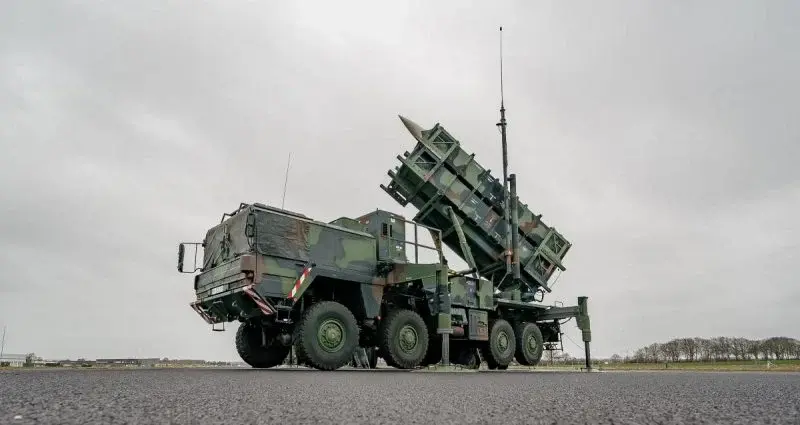
Photo: ArmyInform, CC BY 4.0
Two sirens for a reason
While the license is negotiated, Ukraine is re-engineering how it absorbs the nightly waves. On September 2, day seven of the Kyiv siege, Zelensky announced a two-tier air alert system: yellow for drones, with partial public transport and softer restrictions, red for missiles and massive combined strikes, each with its own siren signal and localized warnings. Shelter standards are being updated, mobile shelters included.
It is an admission built into policy: the alerts are now so constant that treating every Shahed like an Iskander is breaking the country's sleep, schools, and economy. Kyiv logged 13 alerts totaling 872 minutes in a single day in late August. A student put it to the Kyiv Independent simply: "We're tired. We're very, very tired."
And the western strikes matter here too. Khmelnytskyi and Vinnytsia getting hit while Patriot batteries concentrate around Kyiv, Odesa, and the front-line cities is exactly the coverage dilemma more interceptors, and someday more domestic production, are supposed to solve.
Why it matters
Every previous chapter of this story ended the same way: announcements up front, interceptors on backorder. The license fight is not symbolic. Patriot production is the single hardest industrial chokepoint in Ukraine's air defense, and whoever controls the license controls whether Ukraine's air shield is a renewable resource or a depleting stockpile lent by Washington one tranche at a time. Rubio saying negotiations are live, one day after a week of jet-powered Shaheds over Kyiv, suggests the strikes are doing the lobbying.
What to watch
Whether "negotiated as we speak" produces a signed license, and for which interceptor variant. Whether Zelensky's 5 percent purchase request resurfaces in any winter aid package. Whether France's SCALP and Aster license precedent from July becomes the template for Patriot. And whether Russia keeps pushing waves west, forcing Ukraine to spread the batteries thinner before winter.
The channel will keep the ledger. For the raw feed as it breaks, t.me/TheLeaflet. For the morning read, this is The Daily Sitrep.
Sources
RFE/RL, Kyiv Independent, Defense News, CNN, CNBC, ArmyInform, Euronews.


Comments