


A Supermajority for War: The Duma Election Results Are In, and Germany's Firewall Cracked Again


Two parliaments came back from the voters this weekend, and both results bend toward the same war. In Moscow, Russia's Central Election Commission says United Russia has won 355 of the State Duma's 450 seats, the largest faction in the chamber's modern history, in the first parliamentary vote since the full-scale invasion of Ukraine. In Schwerin, some 1,500 kilometers west, the Alternative for Germany took first place in Mecklenburg-Vorpommern with 38.2 percent, its second state win this month, while Chancellor Friedrich Merz's CDU fell below five percent and out of the state parliament entirely.
The Duma election results were manufactured; the German ones were not. That is exactly why they are worth reading together. One shows how the Kremlin builds its mandate for the war. The other shows what the war's long shadow is doing to the politics of Ukraine's largest European military donor.
The Duma Election Results: 355 Seats, Built in Advance
With 95.18 percent of ballots counted, United Russia stands at 57.83 percent of the party-list vote, per Central Election Commission figures carried by Meduza. The projected seat count: 355 for United Russia, 40 for the Communist Party, 25 for the LDPR, 20 for New People, and 4 for A Just Russia. That beats the party's previous record of 343 seats from 2016 and clears the 301-seat constitutional majority with more than 50 to spare. In the district races, United Russia led in 208 of 225 single-mandate seats.

Vladimir Putin at the Kremlin, November 2021. Photo: Kremlin.ru, Wikimedia Commons, CC BY 4.0
CEC chief Ella Pamfilova put turnout at 59.32 percent and called it the highest ever recorded for a Russian parliamentary election. The Moscow Times reports that at least 86 veterans of the war are expected to enter the new Duma, and that independent analysts have called this the most uncompetitive election in modern Russian history. The concurrent regional races produced familiar numbers: Ramzan Kadyrov was reelected in Chechnya with an official 99.85 percent.
The one party running against the war never made the ballot: Russia's Supreme Court barred Yabloko in August. Its leader Nikolai Rybakov spoiled his own ballot on Sunday, writing the party's name and the slogan "For peace" across it, per Al Jazeera. Final certified results are due Friday.
How the Number Was Made
The mechanics deserve as much attention as the total. Per Meduza's election reporting, more than 29 percent of all voters cast ballots on day one, driven by remote electronic voting and workplace mobilization. E-voting turnout reached 90.87 percent, with 3.6 million of 4.03 million registered online voters participating. Russians abroad could not vote at all: Gosuslugi, the state portal required to log in, was down for the entire three-day voting period.
The monitoring platform Vybory 2026 logged more than 900 complaints by Sunday evening, roughly a third of them about observer rights: observers barred from stations, removed from their duties, detained, and in some cases offered vodka in attempts to provoke them, per Meduza. Military recruiters worked polling stations, and at least two voters received military registry notices after voting electronically. Pamfilova, for her part, claimed 100 million cyberattacks on election infrastructure and an attempted malware plant, official claims that cannot be independently verified.
Even inside the managed field, there was signal. The Berlin-based think tank NEST told Al Jazeera that votes for the Communists and New People may in many cases amount to a silent protest, reflecting the economic strain of the war.
Mecklenburg-Vorpommern: The AfD Takes a Second State in Two Weeks
Germany voted the same day, twice, for real. In Mecklenburg-Vorpommern, the AfD finished first with 38.2 percent and 32 of the Landtag's 71 seats, a gain of 18. Manuela Schwesig's SPD held second at 35.5 percent. Merz's CDU collapsed to just under five percent, lost all 12 of its seats, and is out of the state parliament, reportedly its worst result in any state election since 1951. Turnout jumped more than seven points to about 78 percent, per Brussels Signal.
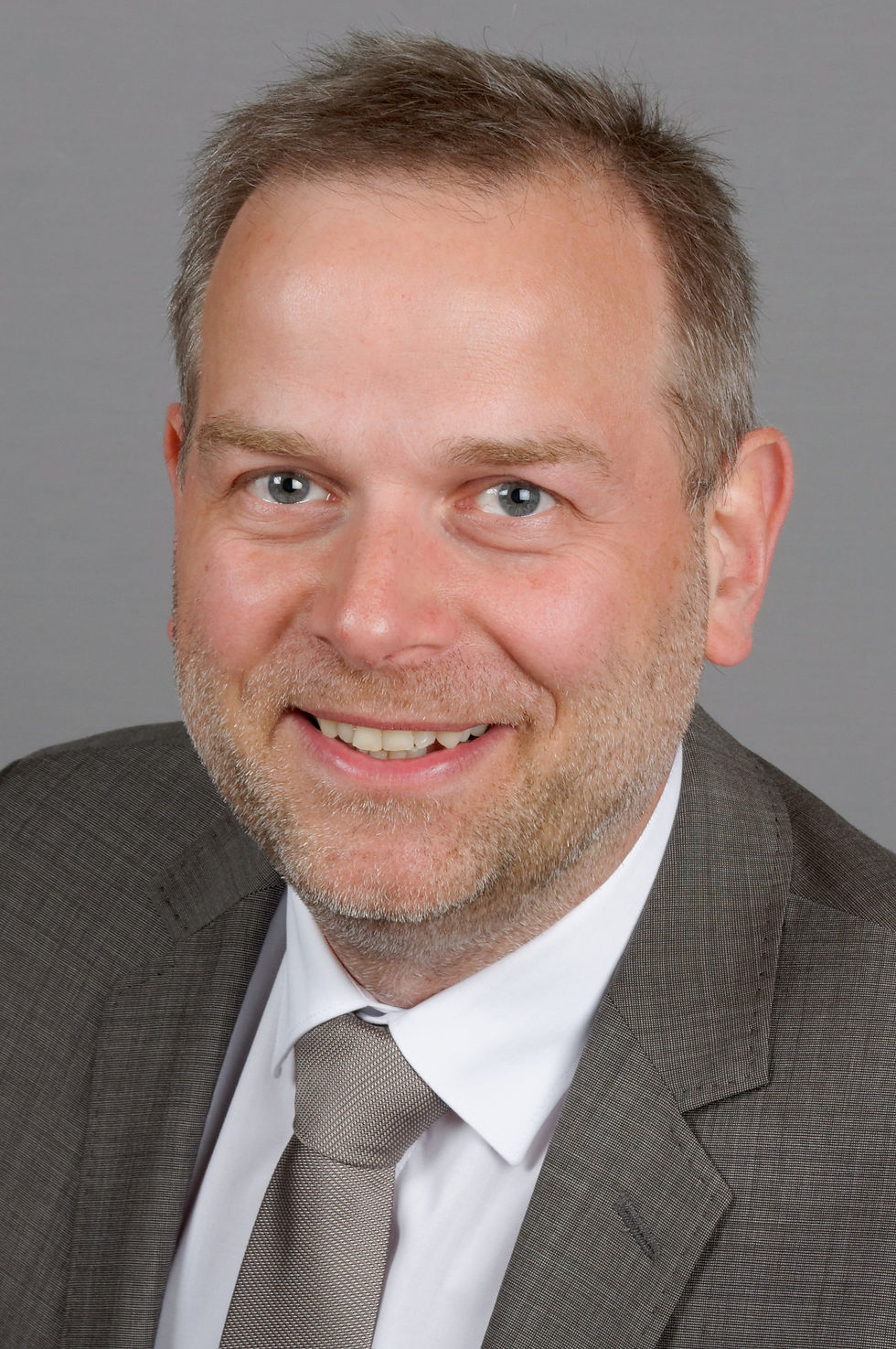
Leif-Erik Holm, the AfD's lead candidate in Mecklenburg-Vorpommern, in a 2017 file photo. Photo: JonasR, Wikimedia Commons, CC BY-SA 4.0
"It is a disaster. The CDU fought hard, but in the end it was the CDU that got crushed," Merz said, while rejecting calls to resign, per AP. AfD co-leader Tino Chrupalla called the result sensational and claimed a mandate to govern, while Alice Weidel said the CDU "cannot continue with Friedrich Merz, with a weak chancellor." Lead candidate Leif-Erik Holm had campaigned on a "blue turnaround" for the state, per Euronews. The firewall holds for now: no party will govern with the AfD, Schwesig says she is ready to continue as premier, and a three-way coalition with the Left and Greens would command about 39 seats.
Berlin voted the same Sunday and swung the other way: the Left won the city-state with 25.7 percent, up 13.5 points, ahead of the CDU at 18.8, the AfD at 16.3, the Greens at 14.3, and the SPD at 12.1, its worst modern result in the capital. Two weeks earlier the AfD had taken Saxony-Anhalt with just short of 44 percent. The pattern across all three votes is the same: Germany's governing center is bleeding in every direction at once. A pre-election survey found 90 percent of Germans rated the federal government's performance negatively, per Brussels Signal.
Why It Matters
The Duma matters less as a legislature than as a signal. Every law of the wartime state since 2022, from the discreditation statutes to mobilization rules, passed through it with near-unanimity. The new chamber, with a record faction and at least 86 veterans of the invasion seated in it, is built to do the same thing faster, and it can amend the constitution at will. Putin framed this vote as a measure of public backing for the war effort, per The Moscow Times. The manufactured 57.8 percent is the number Moscow will now carry into every negotiation as proof that Russia can keep going.

At the signing of the CDU and SPD federal coalition agreement, Berlin, May 2025. Photo: Sandro Halank, Wikimedia Commons, CC BY-SA 4.0
Germany's turbulence is the other half of the story. Germany is Kyiv's largest European military donor, and the AfD campaigned in both states on ending military aid to Ukraine, per AP. The party cannot govern anywhere yet. But every state it wins tightens the vise on Merz's federal coalition, the government that actually signs the aid packages, and Weidel is already framing the chancellor himself as the obstacle. A weakened Berlin is a quieter Berlin, and Moscow reads those results too.
What to Watch
Tuesday in New York: Zelensky meets Trump on the margins of the UN General Assembly, per Axios and others, their first sit-down since Trump signed the Graham sanctions act on September 18. Friday: Russia's final Duma results are certified. In Schwerin: whether Schwesig can actually assemble her three-party majority, and whether the firewall survives the arithmetic. And watch the new Duma's first legislative moves; a chamber stocked with veterans of the invasion will show quickly what it was built for.
The channel will be watching all of it. For the intel between the morning briefs, follow us at t.me/TheLeaflet, and start your day with The Daily Sitrep.
Read next: Forty-Four Percent: The AfD's Historic State Win in Saxony-Anhalt, and What Comes Next and 629 Drones for Election Day: The Biggest Drone Attack on Moscow Opens Russia's Duma Vote.
Want the recap in your inbox? The channel sends one Sitrep Digest email on the 1st of each month, the best of the morning briefs in a five minute read. Drop your email in the subscribe box at the bottom of this page.
Sources
Meduza, The Moscow Times, Al Jazeera, RFE/RL, AP, CNN, Brussels Signal, Euronews, Axios, official German state election returns. Photos: Kremlin.ru (CC BY 4.0), JonasR (CC BY-SA 4.0), Sandro Halank (CC BY-SA 4.0), via Wikimedia Commons.


Comments